09 May 2026
Choosing oak boards at the timber yard
Updated:
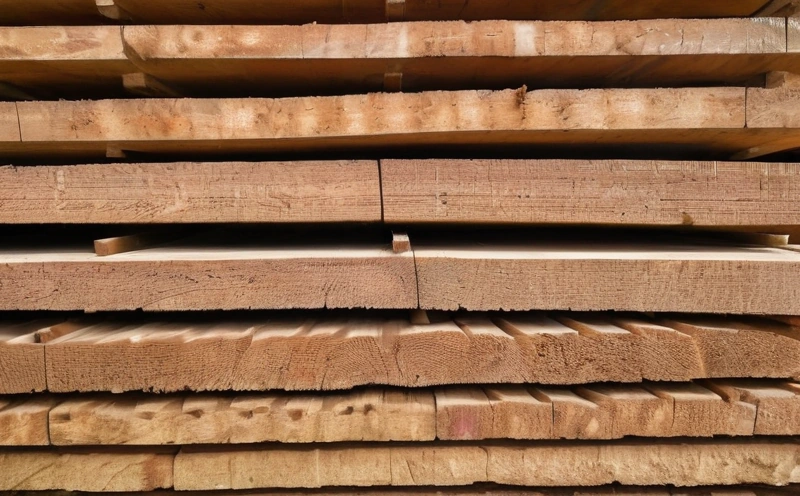
I buy European oak twice a year from a yard forty minutes from the workshop, and the trip now takes three hours rather than one. A badly chosen oak board costs more than any tool in the shop. A cabinet built from a twisting board fails in its second winter, by which point the maker has forgotten which board was at fault.
How does end grain show whether an oak board is quartersawn or flatsawn?
Growth rings meeting the end grain at 60 to 90 degrees mark a quartersawn oak board, and rings crossing the end in long flat arcs mark a flatsawn board. Quartersawn European oak moves about 4mm across a 300mm width in one year of Somerset workshop humidity, and flatsawn oak of that width moves closer to 8mm.
Workshop humidity swings between 45 percent in August and 70 percent in February, and those two readings are the conditions behind every movement figure below. Doubling the movement doubles every problem downstream: a panel that splits its frame, a drawer that binds in July, a tabletop that lifts at the corners.
| Property | Quartersawn European oak | Flatsawn European oak |
|---|---|---|
| Ring angle at the end grain | 60 to 90 degrees | 0 to 30 degrees |
| Movement across 300mm, 45 to 70 percent relative humidity | about 4mm | about 8mm |
| Face figure | Medullary ray fleck | Cathedral arches |
| Price per cubic metre at my yard, 27mm kilned, spring 2026 | £1,850 | £1,450 |
| What the board becomes | Door frames, table legs, drawer sides | Wide tops, drawer bottoms, panels inside frames |
The ray fleck on quartersawn European oak is the figure people pay 28 percent more per cubic metre to get. Flatsawn boards go into wide tops and drawer bottoms, where cathedral figure earns its keep and the construction leaves the board room to move.
What moisture content should oak reach before joinery is cut?
Oak destined for a heated house should read 8 to 10 percent on a pin moisture meter. Three readings per board, one at each end and one in the middle, establish the moisture level. A board reading 14 percent has not finished drying and will shrink after the joinery is cut, opening every shoulder. Stable moisture content also matters when cutting dovetails by hand, because later shrinkage can loosen carefully fitted joints.
The spread between the three readings matters as much as the average. A board reading 9 percent at one end and 13 percent at the other is drying unevenly and will cup as the wet end catches up. A board carrying a four point spread goes back on the stack whatever the yard says about its kiln schedule.
A pin moisture meter costs less than one wasted board of 38mm oak, which is the whole argument for carrying a meter into a yard. Every board I buy then sits in the workshop for at least four weeks, stickered on 20mm bearers spaced every 400mm and weighted on top with two paving slabs.
Which defects appear when an oak board is sighted end to end?
Sighting along a rough sawn oak board with one eye closed reveals three faults that saw marks hide: bow along the length, cup across the width, and twist. Bow up to 6mm on a 2.4m board planes out of 27mm stock and still leaves 20mm of usable thickness. Twist ends the inspection.
Twist means the two ends of a board sit in different planes, and removing twist eats thickness at all four corners at once. One 2.7m board with 9mm of twist came home with me in 2022 and finished as a 15mm plank after flattening, which was no use for the 40mm table legs the board was bought for.
Which oak boards go back on the pile?
Four defects send an oak board back on the pile at the yard: a heart shake radiating from the pith, included bark or a knot cluster in the middle third, grain running out at steeper than 1 in 12, and grey sticker stain deeper than 2mm. Sapwood is a separate calculation and not automatically a reject.
| Defect | What the defect does | Verdict |
|---|---|---|
| Heart shake radiating from the pith | The crack keeps travelling as the board loses moisture | Back on the pile |
| Included bark or a knot cluster in the middle third | The middle third is where the widest components come from | Back on the pile |
| Grain running out steeper than 1 in 12 | Tears out under a plane and stays weak in a leg or a rail | Back on the pile |
| Grey sticker stain deeper than 2mm | Shows through an oil finish as a bruise across the face | Back on the pile |
| Sapwood band along one edge | Sound timber that takes oil paler than heartwood | Buy at a discount, cut the sapwood off, measure what remains |
A drawer front with a stripe of sapwood down one side always reads as a mistake, however sound the timber is. Cutting a 40mm sapwood band off a 250mm board leaves 210mm, and that number decides the purchase before the price does.
How much oak should a cutting list buy?
A written cutting list plus 30 percent for waste sets the volume of oak worth buying, and the widths on that list decide which boards leave the stack. A 300mm wide board is worth roughly three times a 150mm board in this workshop, because a glue line is the one part of a carcase that stays visible.
My worst purchases have all been beautiful boards bought without a cutting list. Prices at my yard in spring 2026 make the arithmetic quick: one 2.4m by 250mm board of 27mm flatsawn oak measures 0.0162 cubic metres and costs about £23.
| Stock | Price per cubic metre | Volume of a 2.4m by 250mm board | Price of that board |
|---|---|---|---|
| European oak, 27mm flatsawn, kilned | £1,450 | 0.0162 m3 | £23 |
| European oak, 27mm quartersawn, kilned | £1,850 | 0.0162 m3 | £30 |
| European oak, 52mm flatsawn, kilned | £1,550 | 0.0312 m3 | £48 |
| Ash, 40mm, kilned | £950 | 0.0240 m3 | £23 |
Those prices are what one Somerset yard charged me in April 2026 for rough sawn stock collected in person, not a national average. A cutting list for a small side table runs to about 0.09 cubic metres of 27mm oak once 30 percent waste is added, which is six boards and roughly £140.