02 Apr 2026
Cutting dovetails by hand
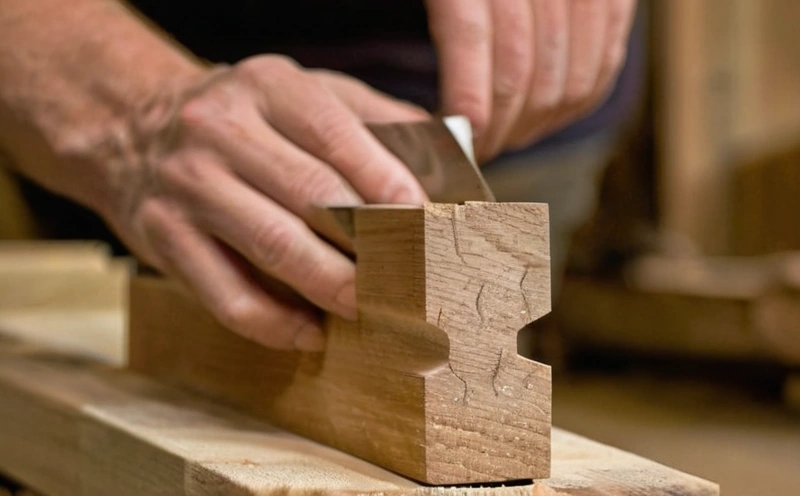
My first set of dovetails, cut in pine in 2011, had gaps at four corners wide enough to drop a coin through. Fifteen years later every drawer joint in this workshop is still cut by hand, and the dovetail has taught me more than any other joint. Two mistakes account for nearly every bad dovetail I have cut, and both mistakes happen before the chisel touches the wood.
What has to be measured and marked before a dovetail is sawn?
Dovetail marking starts with both boards planed to final thickness: 9mm for an oak drawer side, 18mm for the front. A marking gauge set to the mating board thickness scribes the baseline on both faces and both edges, and a marking knife, never a pencil, carries every layout line.
Planing a board after the joint is cut moves the baseline and ruins a fit that was good on the bench half an hour earlier. A gauge line is a shallow trench with two crushed walls, and the chisel falls into that trench during paring, which is the whole point of scribing the baseline first.
A 0.5mm mechanical pencil draws a line about 0.5mm wide. Eight sawn faces on one corner, each placed half a millimetre out, add up to a joint that rattles. A knife line has one wall and one side, and the saw plate finds that wall by feel.
The tail slope changes with the timber. On a 90mm wide drawer side I mark four tails with half pins at both edges, spaced with dividers rather than a rule, which puts the arithmetic in the tool instead of my head.
| Timber | Tail slope | Angle from square | Reason for that slope |
|---|---|---|---|
| Oak, ash, walnut | 1:8 | 7.1 degrees | A shallow slope leaves more long grain at the tail corners in a dense timber |
| Pine, poplar | 1:6 | 9.5 degrees | A steeper slope gives soft fibres more mechanical hold against pull out |
| Shop jigs and drawers in mixed stock | 1:7 | 8.1 degrees | One dividers setting that serves hardwood and softwood without a reset |
The gap between a 1:8 slope and a 1:6 slope is 2.3 degrees, and nobody looking at a finished drawer will name the angle. The difference shows up as strength at the tail corners in oak, where short grain shears off under a mallet.
Why does the dovetail saw cut on the waste side of the knife line?
A dovetail saw with a 0.5mm plate and 15 teeth per inch, filed rip, must cut entirely on the waste side of the knife line. Leaving the knife line visible on the finished face keeps enough material for a chisel to close the joint later, and sawing the line away removes material that cannot be replaced.
Each cut starts with the saw plate resting in the knife line at the far corner of the board, the saw tilted so only two or three teeth touch, and my left thumb knuckle acting as a fence. Three light pull strokes open the kerf. Once the kerf is open the kerf steers the saw, and my job is to keep the plate falling under its own weight.
The saw runs down to the baseline and stops. A coping saw then removes the bulk of the waste between tails, staying about 1.5mm clear of the baseline, because a coping saw blade that touches the baseline scores a line the chisel cannot pare out cleanly.
How much waste does a chisel pare out of a dovetail socket?
A coping saw takes the bulk of the dovetail waste to within 1.5mm of the baseline, and a chisel pares the last 1.5mm. The chisel chops halfway through from one face, then finishes from the opposite face, because chopping straight through in one direction pushes fibres out the back and tears the exit edge.
The chisel has to take a shaving off oak end grain without a mallet behind it. An edge that needs a mallet for a paring cut is an edge that crushes fibres instead of severing fibres, and crushed fibres swell when glue reaches them.
Inside the socket the floor gets undercut by about 2 degrees, so the middle of the socket floor sits lower than the shoulders. Nobody sees the middle of a socket. The shoulders close against the mating board, and a hollow behind the shoulders costs nothing.
Transferring the tails to the pin board is the fussiest ten minutes of the job. The pin board goes in the vice, the tail board sits square on top and clamped, and the knife marks each tail held flat against the sawn face. Any wobble at that moment is copied into the pins and cannot be corrected afterwards.
Which two mistakes ruin a hand cut dovetail?
Two mistakes ruin a hand cut dovetail: a saw kerf that crosses the knife line by 0.3mm, and a socket floor left with a hump. A crossed knife line opens a gap no plane can hide. A humped socket floor holds the joint 0.4mm open at every corner under any clamping pressure.
When the saw wanders across the line, the honest fix is to stop, mark the wandering face, and pare that face back to the line with a chisel before anything is assembled. Glue and clamps do not close a kerf that went the wrong side of a knife line.
A humped socket floor is found with the flat of a chisel held on edge across the floor and a light behind the blade. Any gap of light under the chisel means more paring. A joint bottomed out on waste stays open however hard the clamps are wound.
| Stage | Target | What missing the target costs |
|---|---|---|
| Saw kerf against the knife line | Entirely on the waste side, 0mm over the line | 0.3mm over the line opens a gap a plane cannot hide |
| Coping saw against the baseline | Stop 1.5mm clear | A scored baseline leaves a ragged shoulder in the finished joint |
| Socket floor | Flat, or undercut 2 degrees behind the shoulders | A hump holds the joint 0.4mm open at every corner |
| Dry test fit | Closes to 2mm short of home | Driven fully home dry, the tail corners crush and later spring back |
How tight should a dovetail test fit be before glue?
A dovetail should close on one firm push, or on two mallet taps through a softwood block. Repeated hammering crushes the tail corners, and crushed corners spring back once glue and water reach the fibres. The test fit stops 2mm short of home, and the last 2mm happens under clamps.
Crushed corners are why a joint that felt tight on Tuesday shows a hairline on Thursday. The fibres were compressed dry, water in the glue released the compression, and the tail grew back into a socket already cut to size.