15 Jun 2026
Building an oil finish on walnut, coat by coat
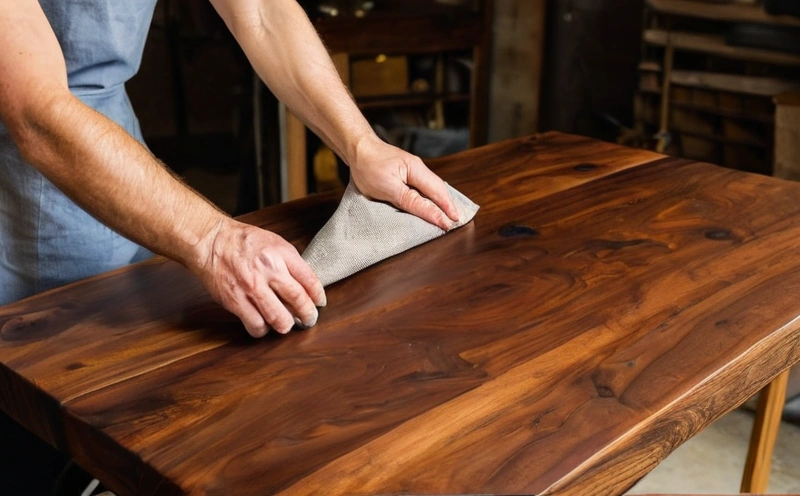
Walnut under oil is the reason I keep buying walnut. Bare walnut planed smooth looks grey and a little dusty. Thirty seconds after the first coat of oil the same board goes deep brown with purple in the darker streaks, and figure that was almost invisible on the bench stands up. Five coats over six days finish a panel, and most of those six days involve doing nothing at all.
Which oil goes on walnut, and how does polymerised linseed oil differ from raw?
Polymerised linseed oil is linseed oil heated without oxygen until the molecules link before the oil reaches the can, and polymerised oil cures harder and faster than raw linseed oil, which can stay tacky for a week. The first coat on walnut is thinned 20 percent with odourless white spirit, and later coats go on unthinned.
One litre of polymerised linseed oil has covered two years of work in this shop, across roughly fourteen pieces. Oil goes on with a folded cotton rag rather than a brush, because a brush leaves more oil on the surface than a walnut pore can take.
Used oil rags go straight into a bucket of water. Oily rags left crumpled on a bench generate their own heat as the oil cures, and a workshop fire started that way is the one accident in this trade with no gentle version.
Which grit sequence prepares walnut for an oil finish?
Walnut sands to 220 grit and stops there. The sequence runs 120, then 180, then 220, followed by a water wipe, one hour of drying, and a final light pass of 220. Sanding walnut to 320 or finer burnishes the surface, closes the pores, and leaves a first coat that finishes patchy.
The water wipe raises the fibres crushed by the abrasive so that the first coat of oil does not raise the fibres instead. A first coat over unraised fibres dries rough as sandpaper, and sanding that roughness back cuts through the colour the coat has just produced.
| Grit | Stage | Effect on the walnut surface |
|---|---|---|
| 120 | After planing, on difficult grain only | Removes plane tracks and tearout, leaves scratches visible under raking light |
| 180 | Second dry pass | Removes the 120 scratches, surface reads uniform matt |
| 220 | Final dry pass, then again after the water wipe | Pores stay open, oil absorbs evenly across face and end grain |
| 320 and finer | Not used on walnut before oil | Burnishes and closes the pores, giving patchy absorption and weaker colour |
| 400 | Between cured coats, used dry with almost no pressure | Knocks off dust nibs, throws pale fine dust, leaves the sheen unchanged |
| 600 wet and dry | Coats four and five, with the oil itself as lubricant | Oil and walnut dust slurry fills the open pores and levels the surface |
How is the first coat of oil put on walnut?
The first coat of polymerised linseed oil floods walnut end grain and stays visibly wet across the whole surface for 15 minutes, topped up wherever a patch goes dull. Every trace of surplus then comes off with a dry cotton rag along the grain, and a second dry rag goes over the piece five minutes later.
Surplus oil left on the surface is the most common way to ruin an oil finish. Oil left standing cures into a sticky film with the texture of dried honey, and removing that film means white spirit, wire wool, and starting the whole schedule again. If a fingertip drags at all after wiping, the walnut is still carrying oil.
The piece then waits at 18 degrees and 55 percent relative humidity for 24 hours. Cold slows the cure badly, and nothing gets oiled in this shop below 12 degrees, because a coat that takes three days to harden collects dust for three days.
| Workshop temperature | Relative humidity | Wait before the next coat |
|---|---|---|
| 22 degrees | 45 percent | 18 hours |
| 18 degrees | 55 percent | 24 hours, the standard schedule |
| 12 degrees | 65 percent | 48 to 72 hours |
| Below 12 degrees | Any | No coat goes on, the cure collects dust for three days |
How many coats of oil does walnut need, and what changes between coats?
Walnut takes five coats of polymerised linseed oil across six days, each coat thinner than the one before. Coats two and three each use about a third of the oil coat one used and sit wet for five minutes rather than 15. Coats four and five go on as a 600 grit slurry instead of by rag.
The slurry of oil and fine walnut dust fills the open pores, and after a thorough dry wipe the surface loses the slightly grainy feel that walnut keeps under three coats. Dried slurry left in the pores looks like grey smears, so the wipe after a slurry coat has to be more careful than any other wipe in the schedule.
| Coat | Applied with | Wet time | Oil used against coat one | Sheen and feel after cure |
|---|---|---|---|---|
| 1 | Cotton rag, thinned 20 percent | 15 minutes | 100 percent | Dead matt, pores felt clearly under a dry palm |
| 2 | Cotton rag, unthinned | 5 minutes | 35 percent | Matt, slight resistance to a dry palm |
| 3 | Cotton rag, unthinned | 5 minutes | 35 percent | Very low sheen, pores still felt |
| 4 | 600 grit wet and dry, oil as lubricant | 5 minutes | 20 percent | Pores filling, surface reads level under raking light |
| 5 | 600 grit wet and dry, oil as lubricant | 5 minutes | 15 percent | Low sheen, close to unglazed pottery |
| 6 and 7, dining tops only | Cotton rag, unthinned | 5 minutes | 15 percent each | Marginally higher sheen, better resistance to spilled water |
Between coats, once the previous coat is properly hard, 400 grit paper used dry and with almost no pressure goes over everything, followed by a clean cloth. Two light passes are enough, and the dust that comes off should be pale and fine rather than brown and gummy. Brown gummy dust means the coat underneath has not cured.
How should a finished oil surface feel, and when is walnut hard enough to deliver?
A dry palm run across five cured coats of oil on walnut moves without catching and without squeaking, and the surface feels like a river pebble rather than glass. Drag under the palm means an unwiped patch of oil. A squeak means the walnut is too dry and wants a sixth coat.
The sheen from five coats is low, roughly what unglazed pottery gives back. Anyone wanting a mirror should choose a film finish instead, because ten coats of polymerised linseed oil still produce an oil finish.
Full hardness arrives at about 14 days, not 24 hours. A walnut desk I delivered on day three of curing came back with a laptop shaped dull rectangle pressed into the top, and I refinished the whole surface at my own cost. Nothing now leaves the workshop until two weeks after the last coat.