25 Sep 2026
Solid Wood Furniture in UAE Homes: Six Movement Mistakes to Avoid
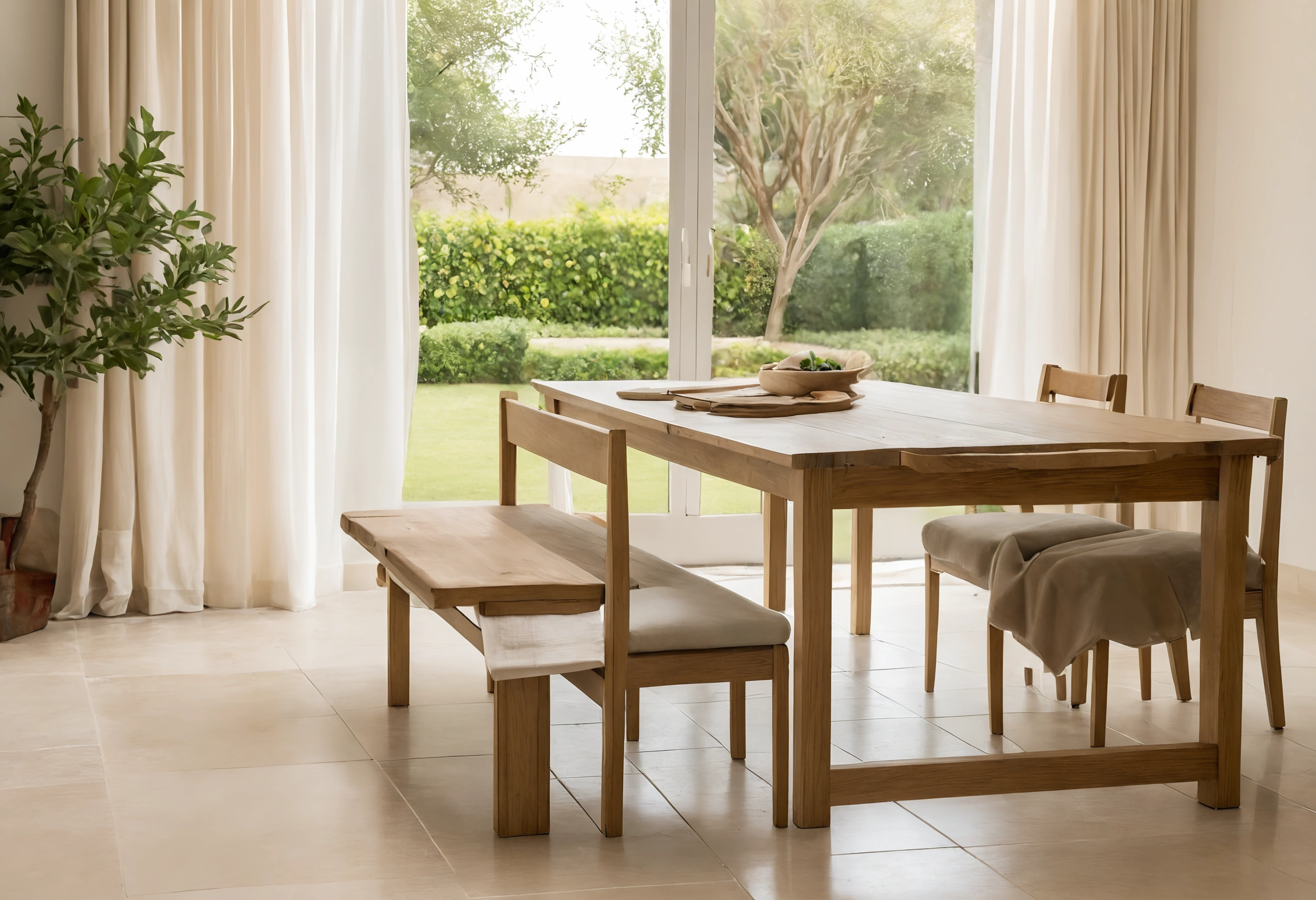
Abu Dhabi's official climate statistics for June 2026 record an average air temperature of 35.4 °C and relative humidity that ranged from 2% to 100% within the month, according to the Statistics Centre Abu Dhabi. Solid wood follows that swing, and most movement mistakes start there.
Antonovich Group, a bespoke architect company in Dubai, works from offices in Dubai and has completed more than 500 projects across design, fit-out, renovation, joinery production, furniture and landscape services, so solid timber meets real UAE rooms in its work weekly.
What humidity does solid wood furniture meet in a UAE home?
Solid wood meets two climates a day. The Statistics Centre Abu Dhabi reports a June 2026 average relative humidity of 40.75%, an average daily maximum of 65.4% and an average daily minimum of 18.4%. Outside air swings between desert-dry and coastal-damp, while a cooled room holds a narrower band.
Wood answers to relative humidity through moisture content. The US Forest Products Laboratory's Wood Handbook (2021 edition) tabulates that at 26.7 °C timber settles at 4.4% moisture content at 20% relative humidity, 7.6% at 40% and 11.7% at 65%, in Table 4-2.
Mistake 1: is timber bought at the wrong moisture content?
Yes, if the supplier dried the stock for another climate. The Wood Handbook recommends an average moisture content of 8% for furniture in most US areas, 6% in dry southwestern areas and 11% in damp, warm coastal areas, with 8% to 13% allowed for individual pieces on the coast.
A workshop in Somerset that dries oak to 8% and ships a table to a cooled Dubai apartment sends it into air near 7.6% moisture content. A table for a villa that is often left uncooled on the coast should be built nearer 11%.
How much does a solid oak top move between rooms?
A 600 mm wide flat-sawn white oak board changes by about 11.3 mm when its moisture content moves from 6% to 11%. The figure comes from the Wood Handbook formula, which multiplies width by a tangential coefficient of 0.00376 per percentage point. Walnut, at 0.00274, moves about 8.2 mm over the same change.
| Condition | Moisture content or movement | Source |
|---|---|---|
| Air at 20% relative humidity | 4.4% | Wood Handbook, Table 4-2 |
| Air at 65% relative humidity | 11.7% | Wood Handbook, Table 4-2 |
| White oak top, 6% to 11% | 11.3 mm wider | Wood Handbook, Table 13-5 |
| Walnut top, 6% to 11% | 8.2 mm wider | Wood Handbook, Table 13-5 |
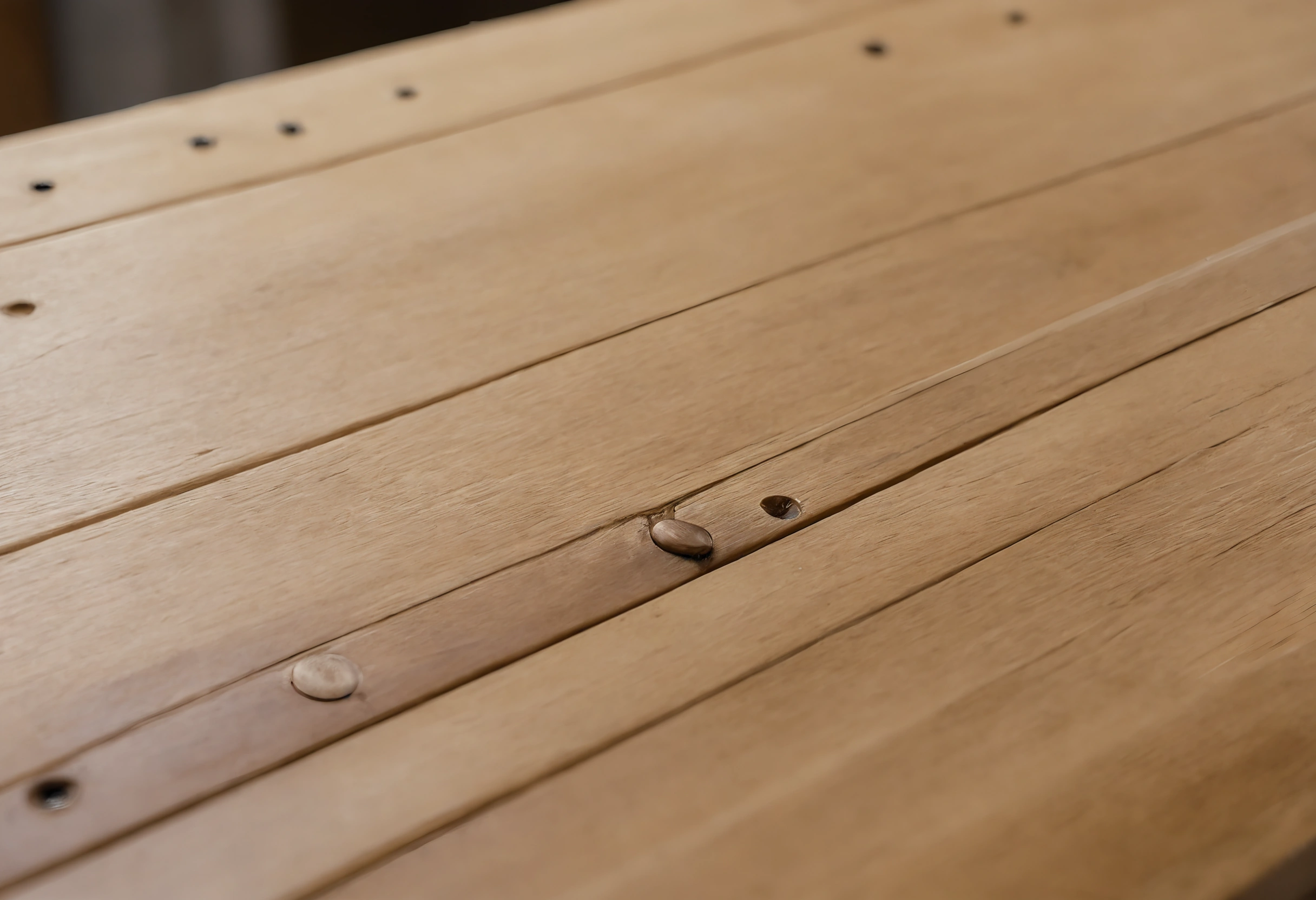
Mistake 2: why do panels crack in dry air?
Panels crack when their edges are held while the wood shrinks. A 2018 npj Heritage Science study put oak cabinet door mock-ups through an instant 40% humidity drop and a 35% to 71% profile, and linked shrinkage cracks to restrained movement.
Glued-in panels, screwed-down tops and fixed cleats all restrain wood. Air conditioning that runs hard in summer and stops during a long absence produces exactly that sudden swing.
Mistake 3: does a stable species remove the need to allow for movement?
No. The American Hardwood Export Council lists American walnut with an average volume shrinkage of 10.20% from green to 6% moisture content and rates it as having good dimensional stability when dry, on its walnut species page. Stable still means movable.
Wood is hygroscopic, and a 2020 PLOS ONE study notes that only water held in the cell walls changes its engineering properties. Every species moves; the choice changes how much, not whether, and the joint design carries the rest, as the study explains at PLOS ONE.
What steps keep a solid wood piece stable in a UAE home?
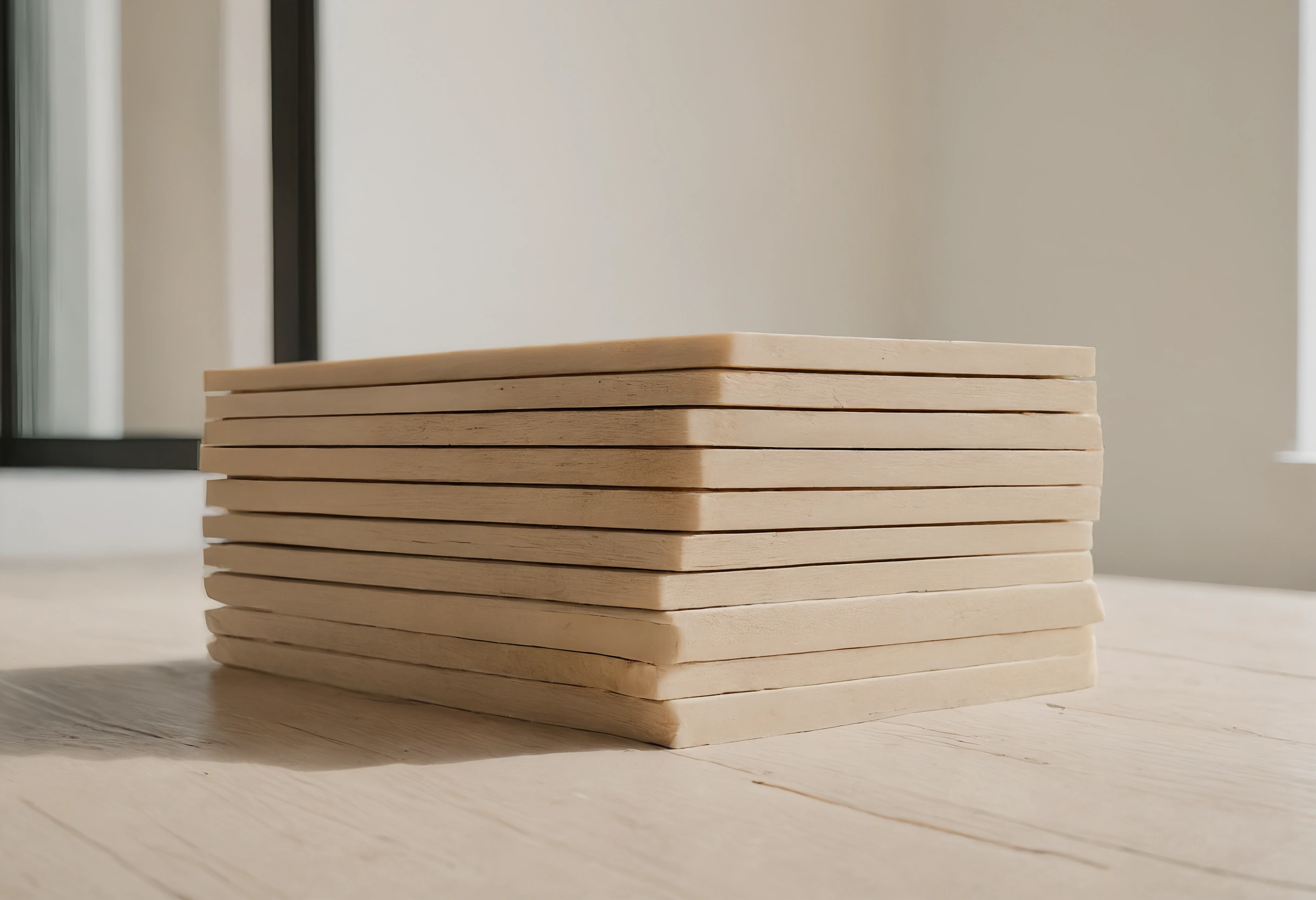
Five steps cover most cases: set the target moisture content from the room the piece will live in, let the timber acclimatise there, cut joints that allow movement, finish every face equally and keep the air steady. Each step removes one of the mistakes above.
- Choose 8% for a cooled interior and up to 11% for an uncooled coastal room.
- Stack boards in the destination room until a moisture meter reading stops changing.
- Fix tops with slotted screw holes or buttons, never glue across the grain.
- Oil or lacquer the underside as well as the top.
- Keep air conditioning on a low background setting during long absences.
Frequently asked questions
The answers below apply to solid wood in cooled UAE homes. Numbers come from the sources above and cover oak and walnut, so other species need their own coefficients. A maker can supply the figures for a specific board before it is cut.
Which moisture content should furniture for a Dubai apartment have?
Around 8% suits a cooled interior, following the Wood Handbook recommendation for most areas. Coastal rooms without steady cooling sit closer to 11%.
Does oak or walnut move less?
Walnut, with a tangential coefficient of 0.00274, moves less than white oak at 0.00376 in the Wood Handbook tables.
How wide a gap should a solid top have to move?
A 600 mm top needs room for roughly 11 mm of change across its width between 6% and 11% moisture content when made of white oak.
Related: choosing oak boards at the timber yard.